 Skip to content

To wash long hair, wet it thoroughly, apply shampoo so you can reach the scalp, then rinse the areas you washed before conditioning as directed. Separating dense sections can make the routine easier to follow. Longer hair is not necessarily thicker hair, so adjust to your own density and texture.
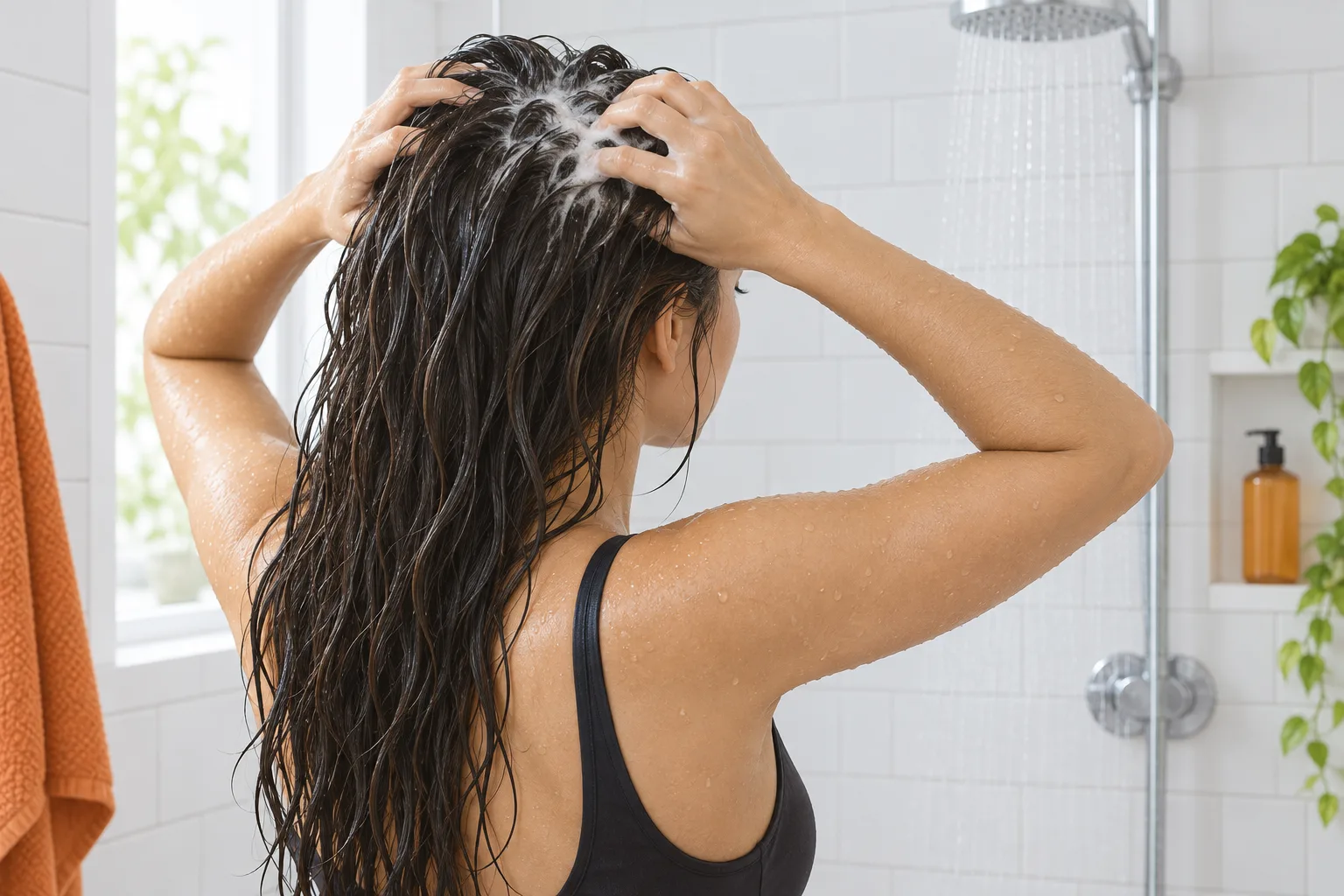
Before you start: make the routine easier to follow
Put shampoo, conditioner and a towel within reach. Identify the areas you tend to miss, such as the back of the head, and decide how to move the hair aside without pulling. A fixed number of sections is unnecessary; the goal is access.
If you detangle, use a method suited to your hair type and avoid forcing a comb through knots. A person with fine, straight hair may need a different routine from someone with dense curls. Keep your product instructions nearby when trying a new shampoo or treatment.
1. Wet the hair and reach beneath the surface
Let the water reach the roots as well as the outer layer. Lift or part dense sections gently. It is easy to see wet lengths and overlook a less-wet area beneath them, so check the places you plan to shampoo before dispensing more product.
Kao's hair-washing guide highlights moving hair aside to reach the scalp and revisiting areas that are easy to miss when rinsing. You can use that access check throughout the routine.
2. Apply shampoo with attention to the scalp
Use the amount and method recommended for your shampoo. Work with the pads of your fingers rather than scratching with your nails. Keep track of the front, sides, crown and back; this is a practical route, not a required order for every hair type.
The American Academy of Dermatology recommends focusing shampoo on the scalp and adjusting conditioner placement to hair type. Follow any different directions provided for a prescribed or specialist product.
3. Rinse the areas you actually washed
Give rinsing its own pass around the head. Move the hair aside where necessary so water reaches beneath dense sections. Check behind the ears and at the back of the head before moving on to conditioner. Follow the product's rinsing directions rather than relying on a fixed timer.
If one area still seems coated with product, check your access and the amount used. Adding another dose of shampoo immediately can make it harder to work out which part of the routine needs changing.
- Wet thoroughly
- Reach the scalp
- Rinse each section
- Condition the lengths
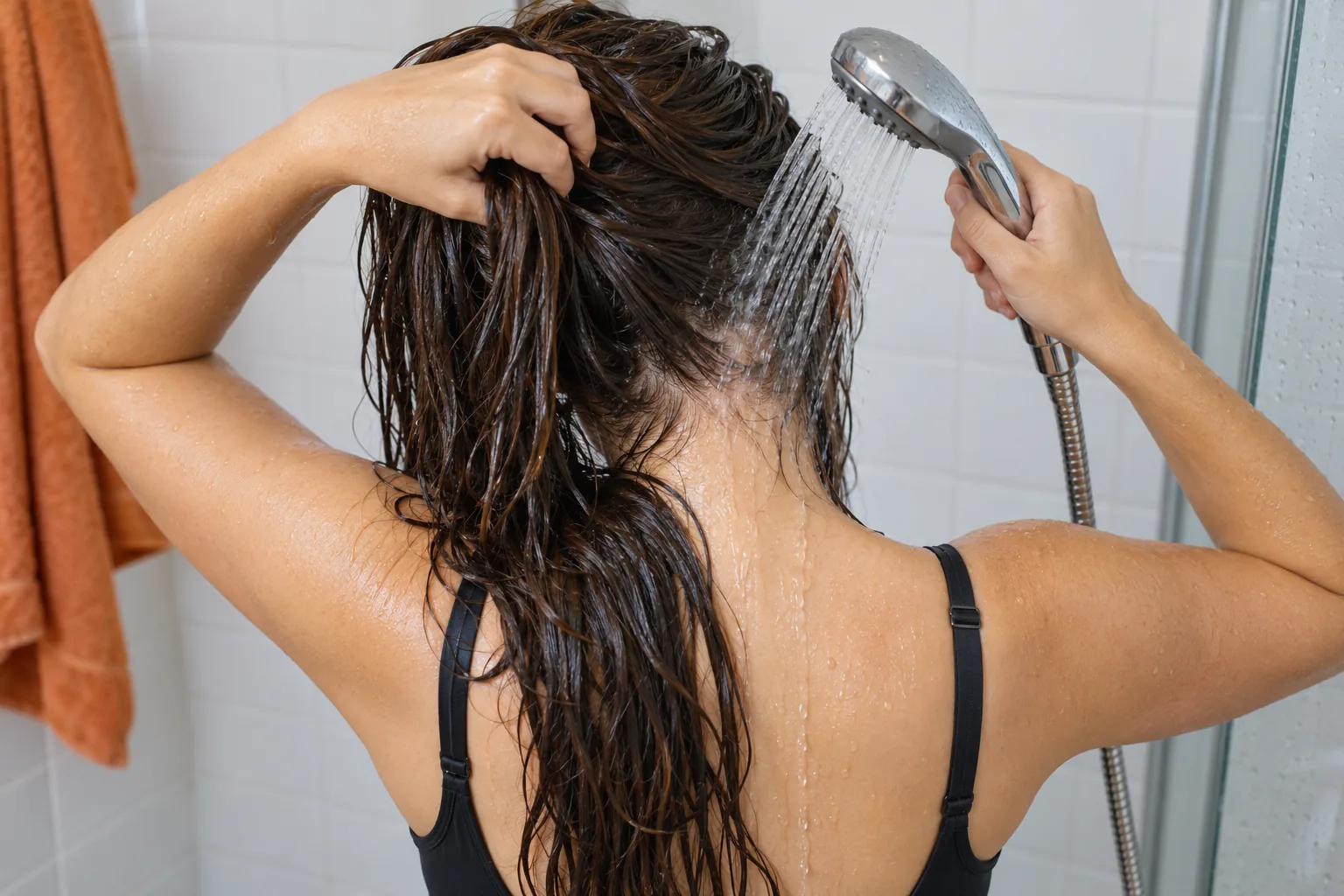
4. Condition and dry with your hair type in mind
Use conditioner where its instructions recommend for your hair. Cleansing the scalp and conditioning the lengths serve different purposes. Handle wet hair gently and absorb moisture without vigorous towel rubbing. Choose a detangling and drying method that suits your texture.
Long hair alone does not determine a washing schedule. Base your routine on how your scalp and hair respond, your activities and the products you use. Persistent itching, pain or irritation needs professional advice rather than more scrubbing.
Video reference: scalp and hair care
English-language video · American Academy of Dermatology
The AAD explains scalp-focused shampooing and conditioning for different hair types. This is general hair-care guidance, not a long-hair washing demonstration.
Open video on the original platform · Original source
Independent educational reference; not a Lazvly demonstration or endorsement. If the player is unavailable, use the source link. Subtitles depend on the provider.
Common problems to check
| What you notice | What to review |
|---|---|
| The back feels less thoroughly washed | Separate that area enough to reach it during both shampooing and rinsing |
| Long lengths tangle during washing | Avoid bunching all the hair together and handle sections gently |
| You keep adding shampoo | Check the label amount, initial wetting and access before increasing the dose |
| A heavy feeling after conditioning | Review where and how much conditioner was applied and how it was rinsed |
These checks help organize your routine; they do not diagnose a scalp condition or prove that a product is unsuitable.
Where a foam-shower device fits
A foam dispenser changes how a compatible shampoo is applied. It does not establish better cleansing or replace reaching the scalp and rinsing thoroughly. Check the exact shampoo's compatibility before using it in a device, and avoid making your own dilution unless instructed.
See Bubble Blast from Lazvly for current project details. Our foam-versus-liquid guide explains the difference between a product formula and its delivery format.
Frequently asked questions
Does long hair always need more shampoo?
Length alone is not a dosing rule. Check the product directions and your hair density, scalp and cleaning needs. More visible foam is not a reliable target dose.
Do I need to shampoo twice?
Not as a universal rule. Follow your product directions and assess your routine. Repeating a wash automatically is not a substitute for reaching missed areas during the first wash.
How long should I rinse thick hair?
There is no single time that fits every head of hair, water flow and product. Follow the label and check all washed sections, especially where the hair overlaps densely.